Housing.com · Platform health
No Site Visit Required
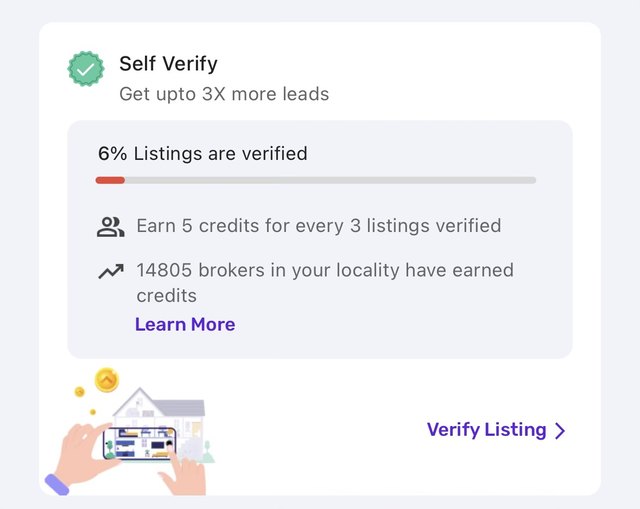
Only 1 in 10 brokers verified their listings. They wanted the badge. They just couldn't get to it.
See the screens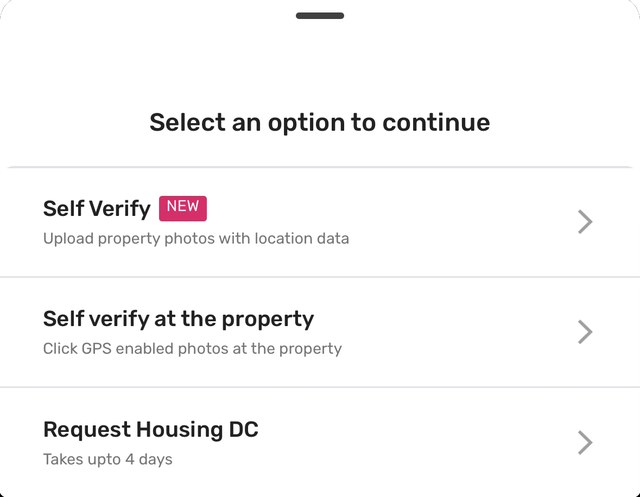
ACT 1
A badge almost nobody earned
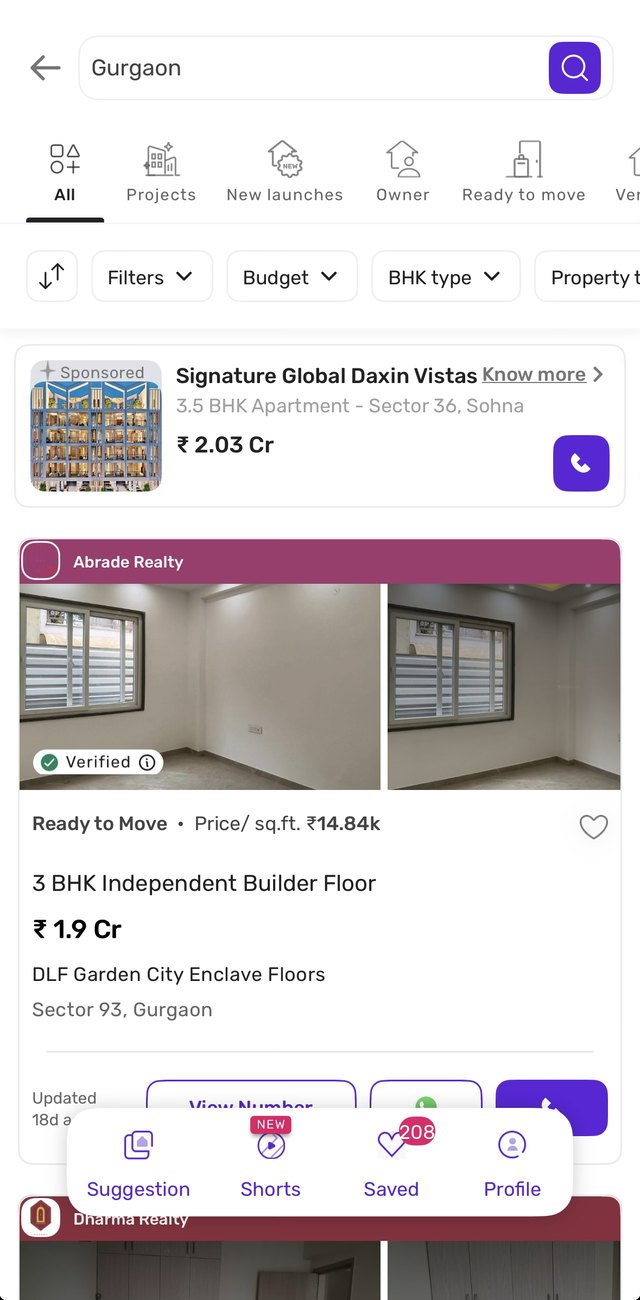
On Housing.com's search results, the verified tag is a promise: this listing is real. It should have been everywhere. Instead, just 12% of listings carried it.
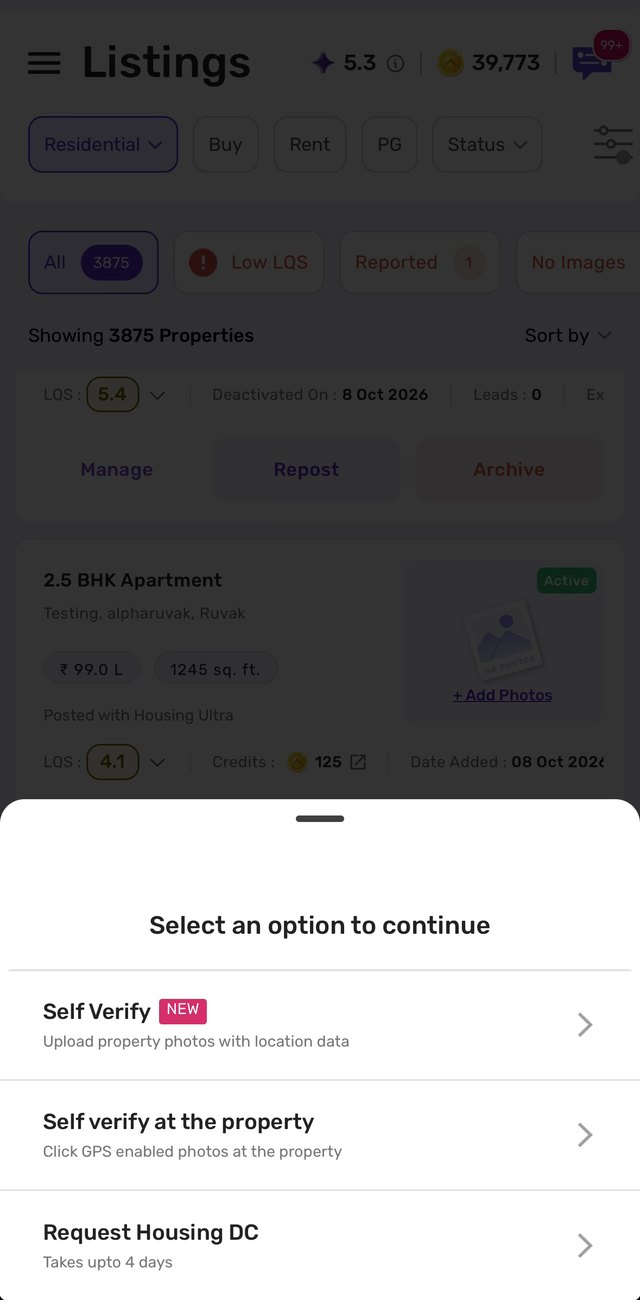
Brokers had exactly two ways to earn it. Drive to the property and take geo-tagged photos on site. Or ask Housing's data collector team to go on their behalf, which was slow, costly and painful for everyone involved.
Two routes. Same dead end: someone had to physically stand inside the property.
ACT 2 Empathize
First, does anyone care about the badge?
Pushing a metric nobody values is just busywork. So before chasing more verified listings, we went to buyers and asked two blunt questions: what does "verified" actually mean to you, and do you trust the tag when you see it on a search result?
Their answers set the bar for what "verified" had to guarantee, and turned a vanity number into something worth growing.
ACT 3 Empathize
Then, the brokers
If buyers wanted the badge, why weren't brokers earning it? Nobody said "I don't care." Everyone said some version of "I can't."
"I have too many properties."
Visiting every listing just to verify it doesn't fit a broker's day.
"There's no network there."
Patchy signal on site made geo-tagged uploads unreliable.
"My tenant still lives there."
You can't just turn up and start photographing someone's home.
ACT 4 Define
The barrier was the trip, not the broker
Our closest competitor sat at around 20% verified listings, and they weren't moving. At 12%, we were behind, but the reason was obvious: the process, not the people. Remove the site visit, and the gap was ours to close.
There was a cost case too. Every field visit by the data collector team was our most expensive way to verify a single listing.
…let brokers prove a listing is real without anyone visiting the property, and without letting fake listings slip through?
ACT 5 Ideate
Easy part: what. Hard part: where.
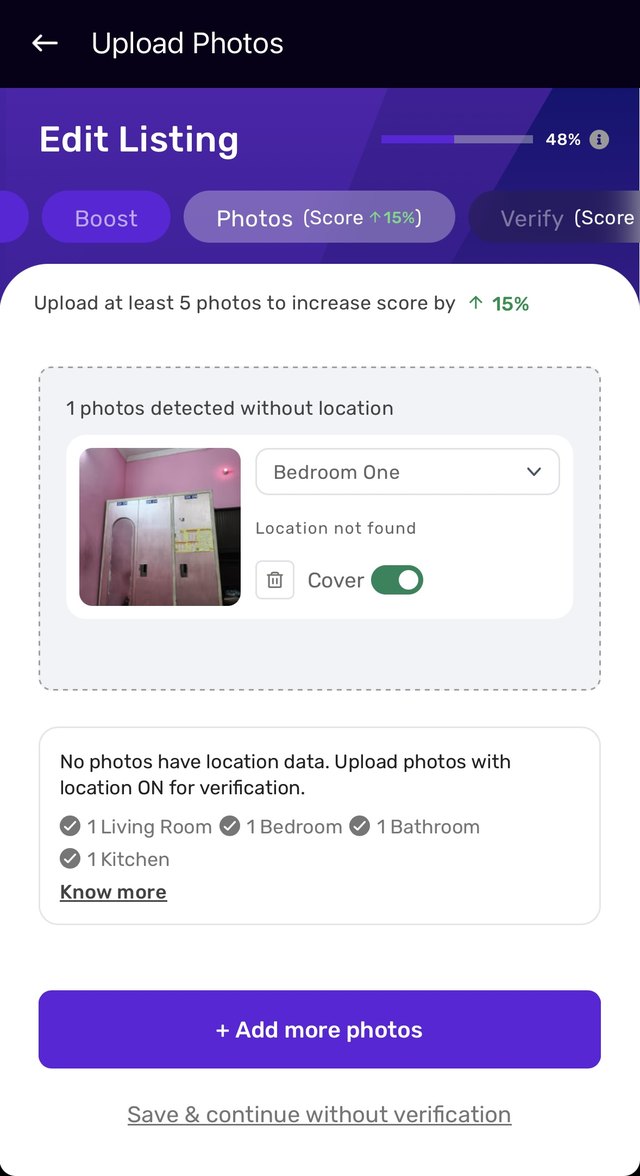
The core idea came quickly. Let brokers upload geo-tagged photos from anywhere, including photos the owner shares with them. The question we wrestled with was where this should live, so it felt like part of the job, not one more chore.
A separate verification flow
Its own journey, reached after the listing is live.
- Clear and self-contained
- One more task to remember
- Asks brokers to come back later
Inside the photo upload
Verification happens while brokers add photos to a new listing.
- Zero extra steps
- Brokers are already holding the right photos
- A soft callout, never a blocker
ACT 6 Prototype
From a detour to a side effect
Brokers now see Self Verify as a new option alongside the old routes. And while they add photos to a listing, we show which images are eligible for verification, right in the upload step. Brokers could publish either way. Verification simply became something that happened while they were already doing the work.