Housing.com · Platform health

Left on Read

Buyers said brokers never called. Brokers said buyers never picked up. Everyone was paying for it.

Response rate +20% Lead quality +8% ~20 broker interviews
See the screens
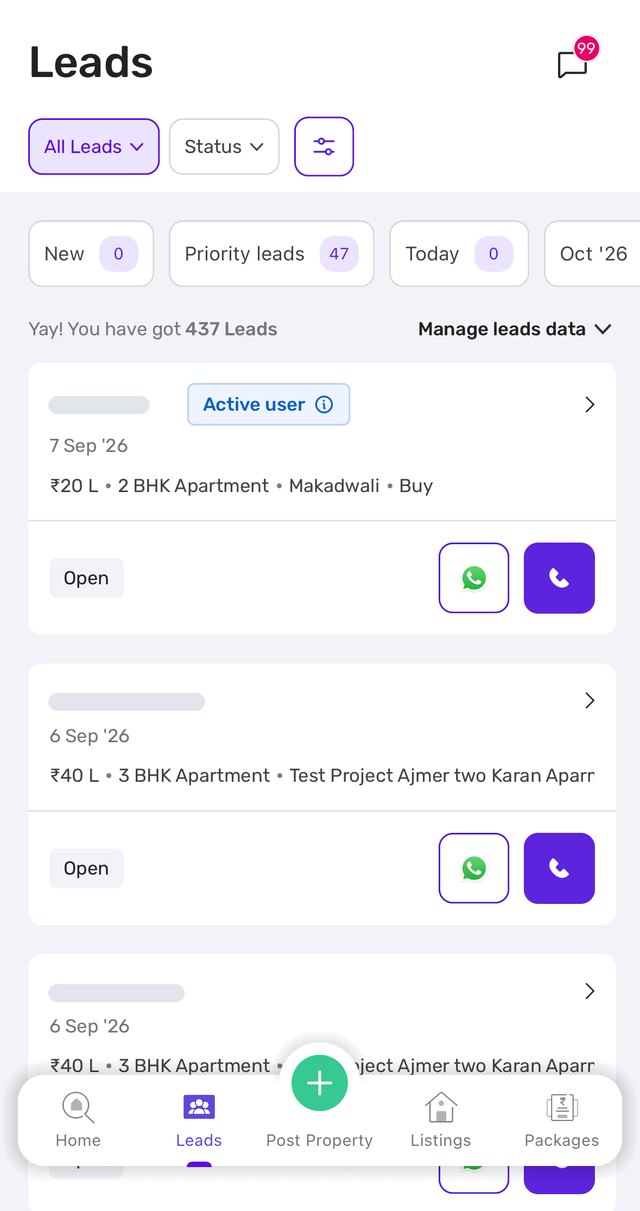
Housing.com leads tab with an Active user tag on a lead

ACT 1 Empathize

Two sides, one broken phone line

The feedback came from both directions, and it didn't match.

BUYERS

"The broker never got back to me."

BROKERS

"I call, but buyers don't pick up."

PAYING SELLERS

"We're paying for leads. Why aren't they good?"

Everyone had a story, and no one had proof. When a lead went cold, there was no way to tell whose side the conversation had died on.

ACT 2

Why this was worth fixing

Sellers on Housing.com pay for lead packages. Good leads are what make that package worth renewing. When leads feel weak, sellers stop believing in the product, and that's how renewals turn into churn.

The data also pointed to a simple lever: fresh leads convert better. A buyer who just showed interest is far likelier to respond than one who's waited a day. Speed wasn't a courtesy. It was conversion.

Every hour a lead sits untouched, it gets a little colder.

ACT 3 Define

You can't fix what nobody measures

So I defined a new metric: seller responsiveness. Did the broker try to reach the buyer, and how fast?

HOW MIGHT WE

…know for sure whether a broker reached out to a lead, and make responding fast feel worth it?

First, we had to capture contact attempts. Every new lead already reached the broker three ways: an SMS, an in-app notification, and a new entry on the leads tab of their dashboard. We turned each of those into something we could record.

Turning every touchpoint into a signal

A NEW LEAD ARRIVES VIASMSIn-app notificationLeads tab
→
BROKER ACTSTaps tracked number linkChat via WhatsAppView contact / in-app chat
→
WE RECORDContact attemptedTime to first contact

In the SMS, we placed the buyer's phone number behind a tracking link, so tapping it told us an attempt was made. On the platform, chatting via WhatsApp, viewing the contact or using in-app chat were all recorded the same way.

ACT 4 Prototype

Make speed something you can see

Once we could measure it, we showed it back to brokers. Every lead on the leads tab now carries a status based on whether contact was recorded, and how quickly: "Not responded yet!" for leads still waiting, or "Poor response (in 24+ hrs)" when a reply came late. A Not responded filter puts every waiting lead in one place.

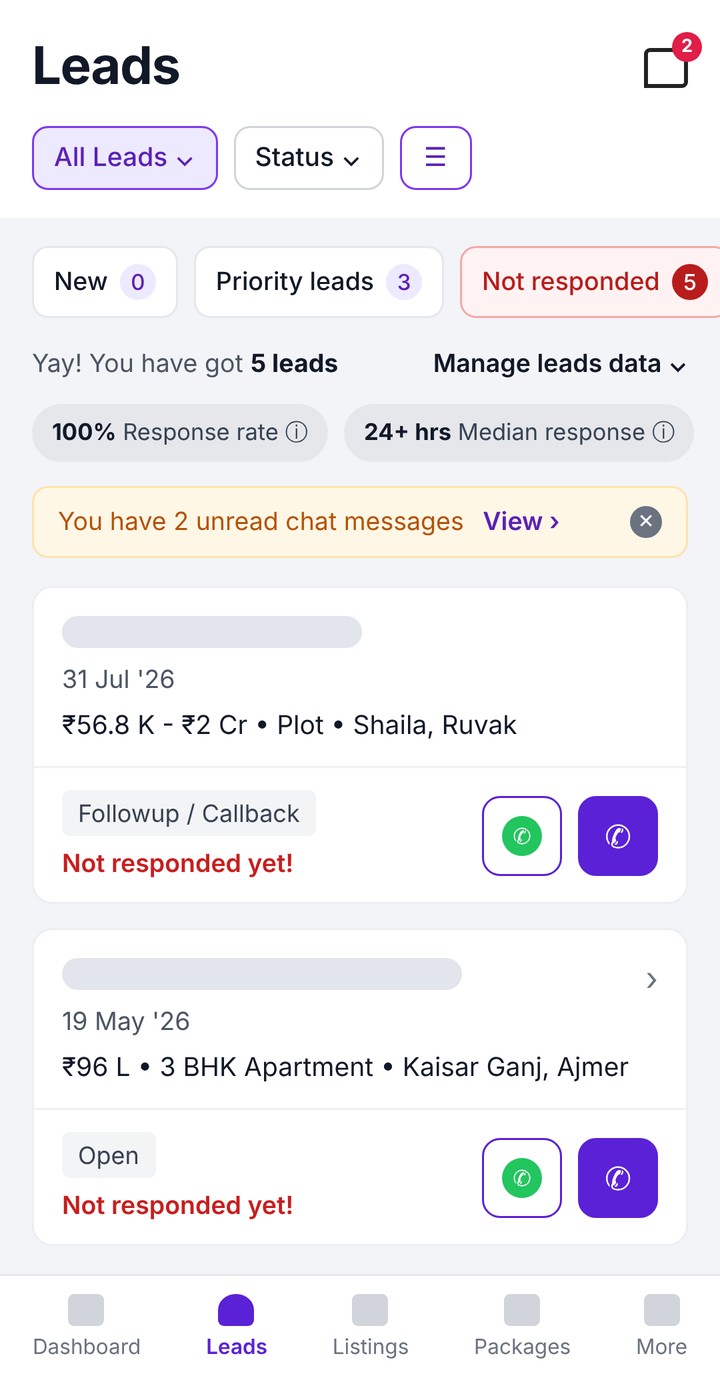
We also showed each seller their overall response rate and median response time at the top of their leads tab, so they could see exactly how they were doing.
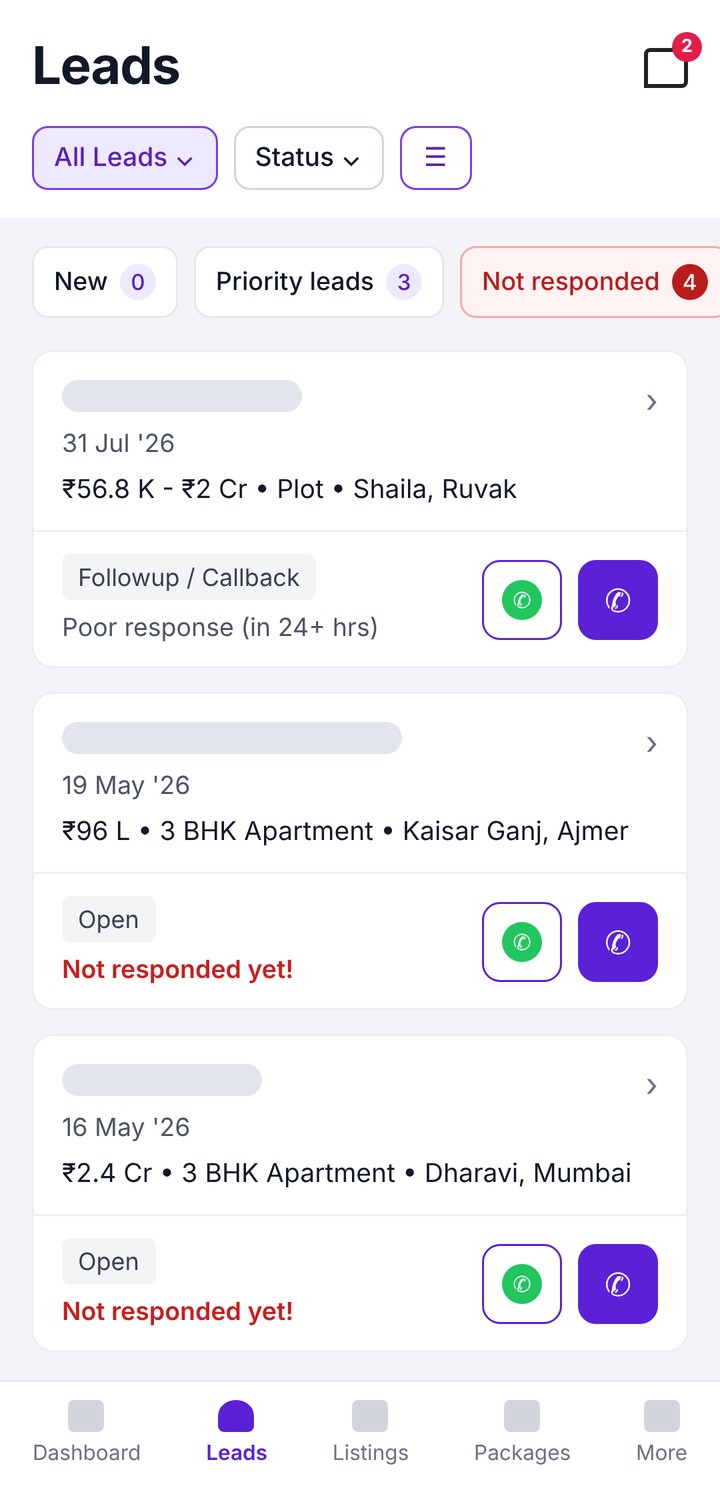
Leads tab showing Not responded yet and Poor response labels, with a Not responded filter
Visible: every lead shows whether, and how fast, it was reached
Leads tab showing a 100% response rate and 24+ hrs median response
Accountable: each seller sees their response rate and median response time

Redrawn from Housing.com's live leads screens for clarity, with buyer names removed.

ACT 5 Test

The numbers didn't add up

Responsiveness improved, but something was off. Some interactions weren't being recorded properly. Brokers insisted they had called, but at times that didn't match our data.

Dashboards could tell us what was happening, not why. So I sat down with around 20 brokers to find the gap.

INSIGHT 01

The buyer had already called first

Sometimes the buyer reached out to the broker before the broker could respond, and our system was tagging that contact differently.

→ This became the "Active user" signal

INSIGHT 02

The property just wasn't a fit

Some leads went quiet because the broker didn't have the configuration the buyer wanted. Not every silence was neglect.

→ Responsiveness alone can't measure intent

Not every unanswered lead was ignored. Some were misread, and some were never a match.

ACT 6 Iterate

From "please call" to "here's why you should"

Reminders alone don't change behavior. Brokers juggle dozens of leads, so they need to know which ones deserve their time first. We added a nudge, and two signals that make a lead's quality obvious.

Nudge

"This lead is waiting"

If a lead sits uncontacted for a while, we follow up with the broker and ask them to reach out.

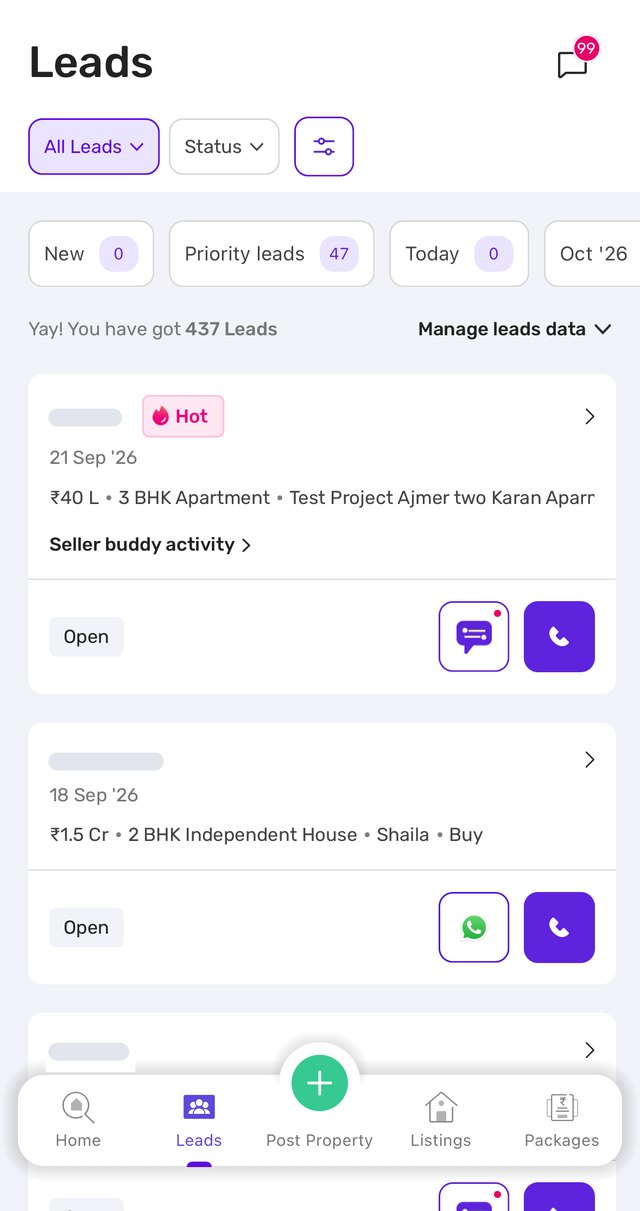
Hot · intent verified

A human confirmed it

Our internal calling team speaks to interested buyers and confirms the configuration and area they want. Those leads carry proven intent.

Active user

The buyer reached out first

When a buyer has already tried to contact the seller, we flag them as active, because they're far likelier to convert.

Nudge: a follow-up when a lead goes untouched
Lead tagged Active user
Active user: the buyer already reached out
Lead tagged Hot
Hot: intent verified by our calling team

ACT 7

What changed

Seller response rate

Baseline
+20%
BeforeAfter

Lead quality

Baseline
+8%
BeforeAfter

Indexed to the baseline before the change, on a 0–1.5x scale.

And the work didn't stop at a launch. Each round of data and broker feedback fed the next.

Measure contact→ Show speed→ Talk to brokers→ Nudge & signal→ Measure again
THE FINAL WORD

Make the invisible visible

When buyers and brokers blamed each other, the real problem was that nobody could see what actually happened to a lead. Measuring contact turned an argument into data. Talking to brokers turned the data into understanding. And showing brokers which leads mattered turned reminders into reasons.

Read another case study Get in touch