Housing.com · Platform health
What Makes a Listing Good?
We had no way to tell a great listing from a bad one. So we built a score, then gave sellers a reason to chase it.
See the screens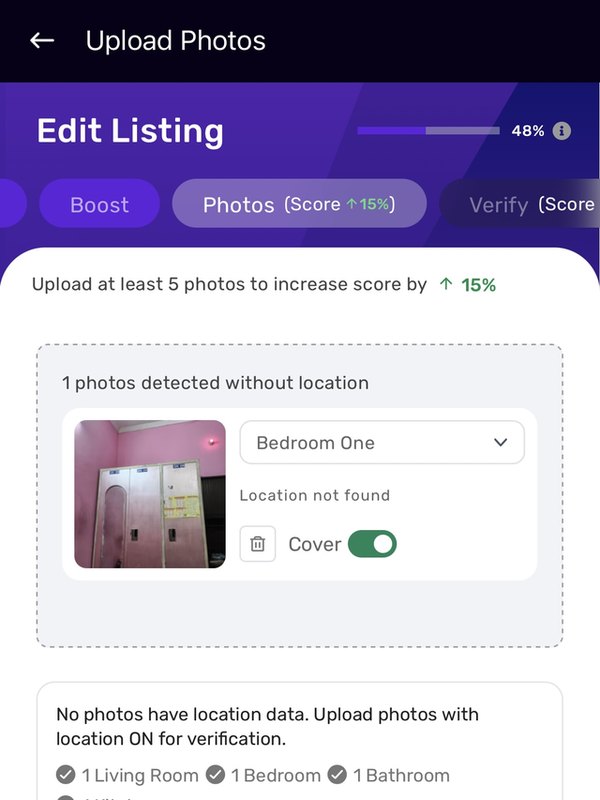
ACT 1 Empathize
The second half of trust
Once we started tracking platform health, verification answered one question: is this listing real? But a real listing can still be a bad one. The next question was harder: is it any good?
Buyers on Housing.com are deciding where to live. A listing is often their first look at a home, and sometimes the only thing standing between them and a site visit. If it leaves them guessing, they move on.
A verified listing tells you it exists. A good listing tells you whether to care.
ACT 2 Define
Three ways a listing lets a buyer down
It's incomplete
Key details are missing, so the buyer can't judge the home.
It's incorrect
The price is off, the configuration doesn't match, or it's a duplicate.
It doesn't show the home
Photos are missing, blurry, or don't show what the buyer wants to see.
…measure the quality of every listing, and get sellers to improve it without us chasing each one?
ACT 3 Build
Three models, one number
Each failure got its own ML model. Together, they produce a single Listing Quality Score (LQS).
How LQS comes together
The modules aren't simply averaged. Dynamic weights balance them, so the score reflects what matters most for each listing.
ACT 4 Guide
A score is useless if you don't know how to raise it
A number on its own just feels like a grade. So on the seller dashboard, every listing shows its LQS alongside guided steps: why the score is low, and exactly what to fix. "Photos are missing on this listing." "The price looks a bit off."